
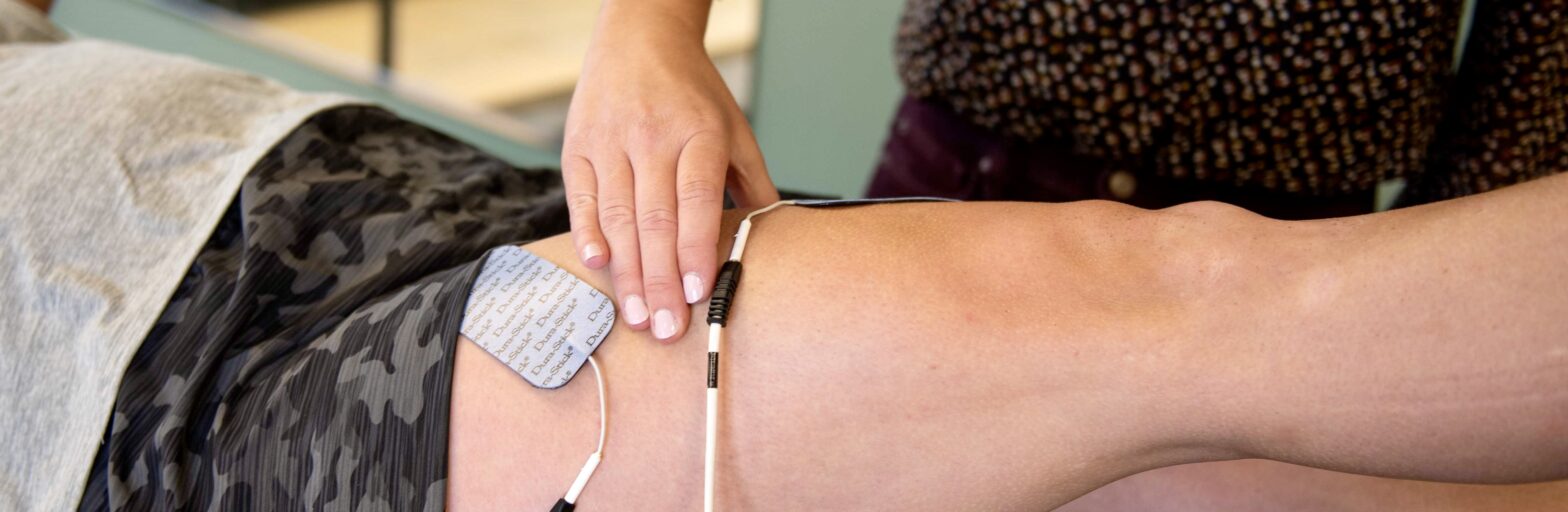
Electrical Stimulation
What is electrical stimulation?
While it may sound a bit intimidating, electrical stimulation really isn’t at all! When used correctly and provided under the guidance of a licensed and skilled physical therapist, electrical stimulation is a safe and efficacious modality that can be used to treat a variety of conditions.
While individual units and modes of delivery can vary, the standard this stimulation device utilizes self-adhesive electrodes placed around the target treatment area on the body. These electrodes are connected via wire leads to the unit, through which electricity can pass and ultimately interact with sensory and/or motor nerves (depending on the type of current utilized).
What is electrical stimulation used for in physical therapy?
There are several electrical stimulation modes that use different types of currents intended to stimulate different nerves in a variety of specific ways. These include modes such as transcutaneous electrical nerve stimulation (TENS), interferential, pre-modulated, Russian, and symmetrical or asymmetrical bi-phasic. Don’t let the words confuse you, though. Your physical therapist will decide the right one to meet your unique needs.
Our clinic frequently utilizes electrical stimulation in order to provide a variety of beneficial healing effects, including:
- Reduce, eliminate, and/or control pain (both acute and chronic)
- Increase local circulation
- Decrease swelling
- Improve range of motion
- Reduce muscle spasm
- Provide biofeedback (aka improve body awareness)
- Improve motor coordination
- Provide neuromuscular re-education
- Prevent or reverse muscle atrophy (especially after prolonged immobilization, such as a limb being casted as a fracture heals)
Pain control and reduction is probably the most frequent indication of this stimulation usage. Specifically, this modality can trigger an innate and completely natural analgesic effect by stimulating specific sensory nerve fibers (including A-beta, A-delta, and C fibers) which both disrupt or decrease the sensation of pain and also elicit the release of certain neurotransmitters which can prolong the pain-relieving effects.
While it’s not for everyone (including people with deep vein thrombosis, people who are pregnant, people with pacemakers, and people with impaired cognition) or safe to use on every body area (including on the anterior neck, eyes, or over areas with damaged skin or decreased sensation), this stimulation can be used for a wide variety of conditions as indicated, including acute sports-related injuries or auto accident-related injuries, repetitive stress injuries, muscle strains, ligament sprains, and even neurological conditions including stroke.
Does electrical muscle stimulation hurt?
No!
The intensity of the electrical muscle stimulation or sensory nerve stimulation is easily modifiable and ultimately will only be as much as you, the patient, can tolerate. Typically, electrical stimulation will feel tingly or prickly (some patients describe it as a comforting “pins and needles” sensation). Sometimes, as in the case when used for muscle strengthening, the intensity level can be high and somewhat uncomfortable, but it should never cause pain.
What should I expect during an electrical stimulation session in Denver, CO?
Our patients’ comfort, safety, and dignity are the number one priority. For this reason, we’ll ask you to come in comfortable loose-fitting clothes and sturdy shoes when you come to see us for an appointment.
At your initial consultation in Denver, CO, expect to be taken through a thorough patient history questionnaire (we’ll ask questions about your current, past, and family medical history) and physical examination. Your physical therapist will be able to diagnose your condition and then devise an appropriate treatment plan to meet your unique needs.
If your physical therapist decides that electrical stimulation is an appropriate part of your plan of care, he or she will first educate you about the specific modality. You’ll be asked to sit or lie in a comfortable position, your skin in the target treatment area will be cleaned and prepped, and your PT will guide you step-by-step through the entire treatment.
Expect great results!
Are you interested in trying electrical stimulation? Wondering if it can help your pain or dysfunction? Our physical therapy services in Denver, CO, including electrical stimulation and other modalities, are evidenced-based, state-of-the-art, effective, and have minimal to no risk of side effects. Come experience the difference and Contact Us today to request an initial consult.